
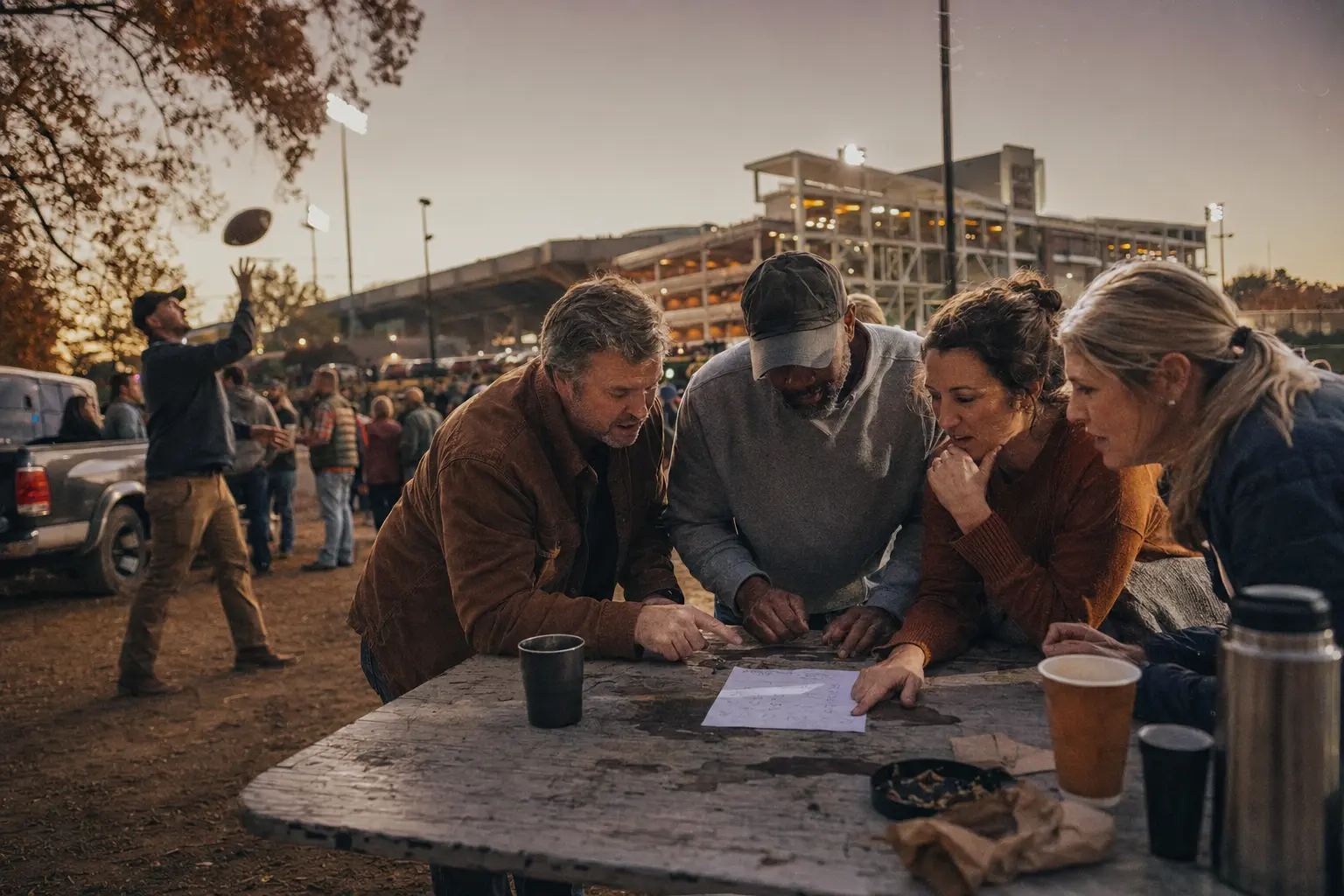
The first football of the day is already in the air before the stadium gates open. It rises above a row of parked trucks, hangs for a moment against the morning sky and drops into the hands of someone who has made that catch in this same lot for years.
Nearby, a radio host is making predictions nobody will remember by dinner. A father points toward the upper deck and tells his daughter about the game he attended with his own dad. Across the aisle, two old friends are arguing about the offensive line as if the coaches might call for help.
That is the real beginning. Sports give a weekend its clock, but people give it meaning. The matchup becomes a reason to drive home, call a friend or wear the same faded shirt that somehow survived every move. Hope arrives without evidence. Tradition takes attendance.
By kickoff, the crowd will become one loud voice. A few hours later, half of it will leave convinced the season has changed. The other half will promise not to care so much next week. Both will come back.
A score can tell you who won. It cannot explain the stories carried through the gate or the conversations waiting on the other side. That is why the game stays with us long after the scoreboard goes dark.
Return To StoriesA score can tell you who won. It cannot tell you why the day mattered.