
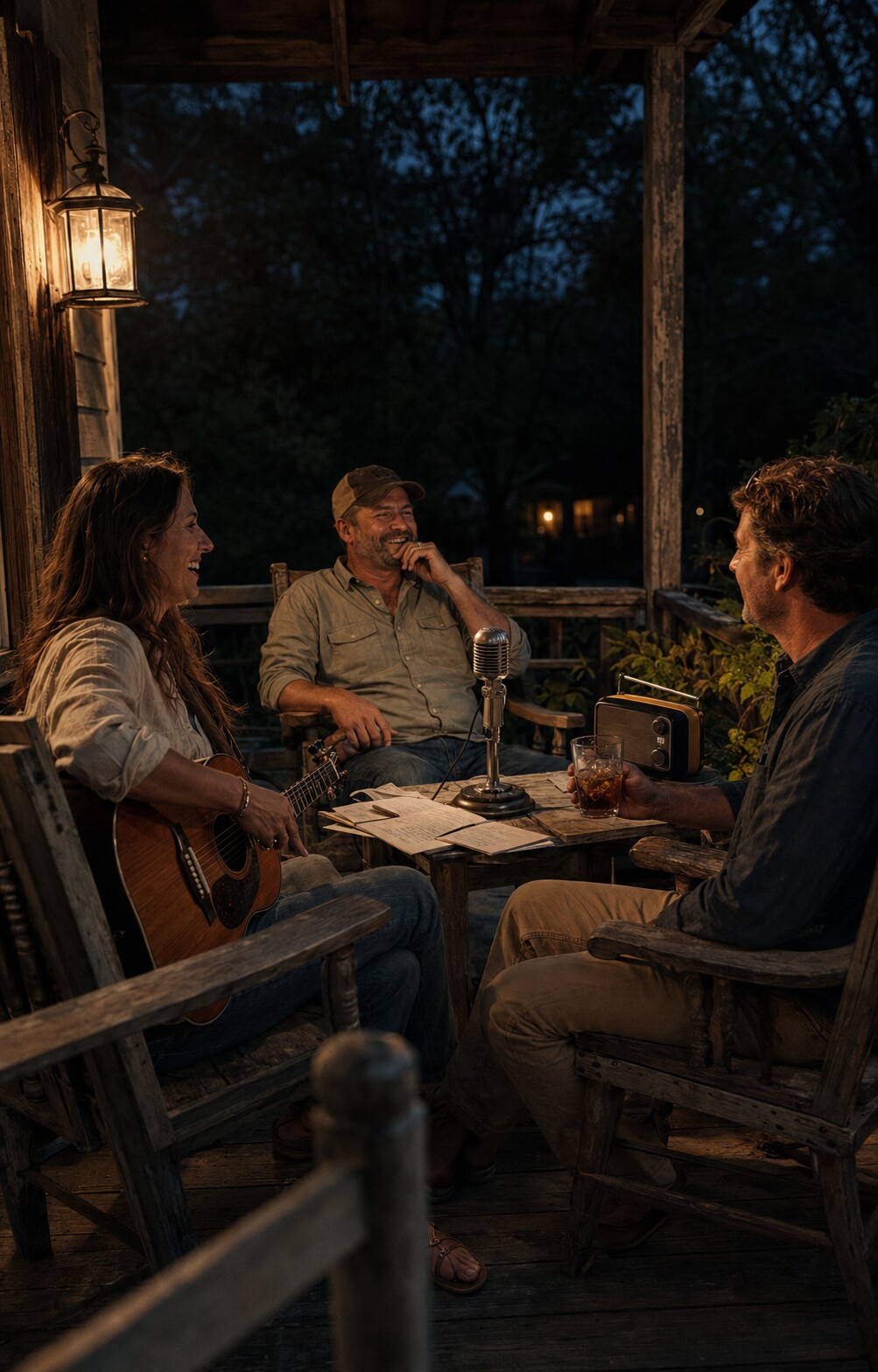
The television is still glowing when someone reaches for the guitar. The postgame show has moved on to another stadium, but nobody on the porch is ready to do the same. There are drinks left in the glasses and at least two arguments that need another round.
The first chords are quiet. Conversation keeps moving over them until the melody becomes familiar. Then a few voices find the chorus. Nobody planned this and nobody asks for silence. The song simply gathers the room in the same way the game did a few hours earlier.
Music carries the parts of a place that statistics cannot hold. It remembers church pews, dance halls, long drives and kitchen radios. It can turn a stranger into a neighbor before the second verse and make an old story feel useful again.
Culture lives in those handoffs. One person teaches the song. Another changes a line. Someone younger hears it from the porch steps and carries it somewhere new. The sound evolves, but the invitation stays the same.
A familiar song does not stop the night. It tells the night where to go next. After the final whistle, when the score has settled and the crowd has thinned, it gives everyone one more reason to stay.
Return To StoriesA familiar song does not stop the night. It tells the night where to go next.